At a Glance:
- Both chemical- and biological-based products are common choices in the industrial, institutional, and consumer cleaning market, but they work in different ways and for different situations.
- Biological products typically provide a more thorough, long-lasting clean, even though results may not be immediately apparent. They excel at maintenance cleaning and prevention of future issues.
- Chemical products, on the other hand, may act quickly to provide visible results in the short term, but they tend to push problems further down the road instead of addressing them at the source. They’re usually good choices for cleaning emergencies.
- As environmental friendliness and green cleaning become more popular among consumers, formulating your products with biological ingredients is a great way to provide effective solutions while boosting your sales.
Chemical-based products are a mainstay of the cleaning industry, but as consumer sentiment continues to shift toward environmental friendliness, biological-based cleaners have made headway in the market. As a distributor or manufacturer of cleaning products, your customers rely on you to provide the best possible solutions to their challenges. But without understanding the unique qualities of each popular type of cleaner, it can be difficult to make a strong recommendation.
Let’s brush up on the fundamental differences between chemical and biological cleaners so that you can move forward with confidence.
How They Work: Simple Breakdown vs. True Digestion
While both biological and chemical ingredients give your product cleaning power, they do so in different ways. The active ingredients in chemical-based products break odor compounds, stains, and other organic material into smaller pieces so they’re easier to wash or wipe away. However, this solution is sometimes just a temporary fix, as the unwanted material is not actually removed. Often, problems are pushed further downstream, creating the potential for future issues.
Biological-based products go deeper, thanks to the powerful bacteria they’re formulated with. The bacteria in biological cleaning ingredients view fats, oils, and grease (FOG) and other stain- and odor-causing compounds as food. Instead of simply breaking down these materials, bacteria digest them to fuel growth. This process removes unwanted material from the application area entirely, addressing common challenges at the source rather than pushing them off further.
With biological ingredients, your products get to the root of persistent odors, clogs, and stains, providing a more thorough and long-lasting clean.
When and Where They Work: Cleaning Emergencies vs. Regular Maintenance
Certain cleaning situations may require solutions that chemical-based products are particularly well-suited to provide, such as disinfecting. Since disinfection can be difficult to achieve with microbial cleaners, chemical ingredients are best for these types of products. Severe problems that need quick solutions are another target for chemical-based products. For example, if you’re formulating an offering to address severe clogs, a chemical ingredient that can quickly break up unwanted material is a great choice.
It’s important to note, though, that even in these instances, chemical product usage can have drawbacks for your customers. Caustic chemical ingredients might cut through stubborn FOG and mitigate the problem in the short term, but they may also damage equipment and infrastructure, potentially leading to long-term issues and high replacement costs. Additionally, as green cleaning becomes more popular and the market for such products grows in response, many consumers may be less apt to purchase chemical solutions because of their relative harshness on health and the environment.
While chemical-based cleaners are appropriate for quick fixes, when it comes to maintenance and prevention, biological products win. The beneficial bacteria in biological cleaning ingredients stick around on surfaces long after they’re applied because they’ve just been surrounded with FOG, odor compounds, and/or organic residue—everything they need to grow and multiply. Their staying power post-application means biological ingredients help you formulate products that stay effective longer and require fewer applications. It may take some time to see results with the naked eye, but you can trust that the bacteria in these ingredients are working from the moment they’re applied to provide a continuous clean.
When it comes to equipment and infrastructure, biological cleaners are typically much gentler compared to their chemical counterparts. Whether your customers have brand new plumbing or decades-old facilities, biological ingredients will reduce their risk of running into corrosion and replacement issues. And, of course, biological products are the main players in green cleaning, with consumer awareness and demand rising steadily (Figure 1). By leveraging your knowledge of the non-hazardous and environmentally friendly reputation of these ingredients, you can formulate products that boost your sales in this rapidly growing market.
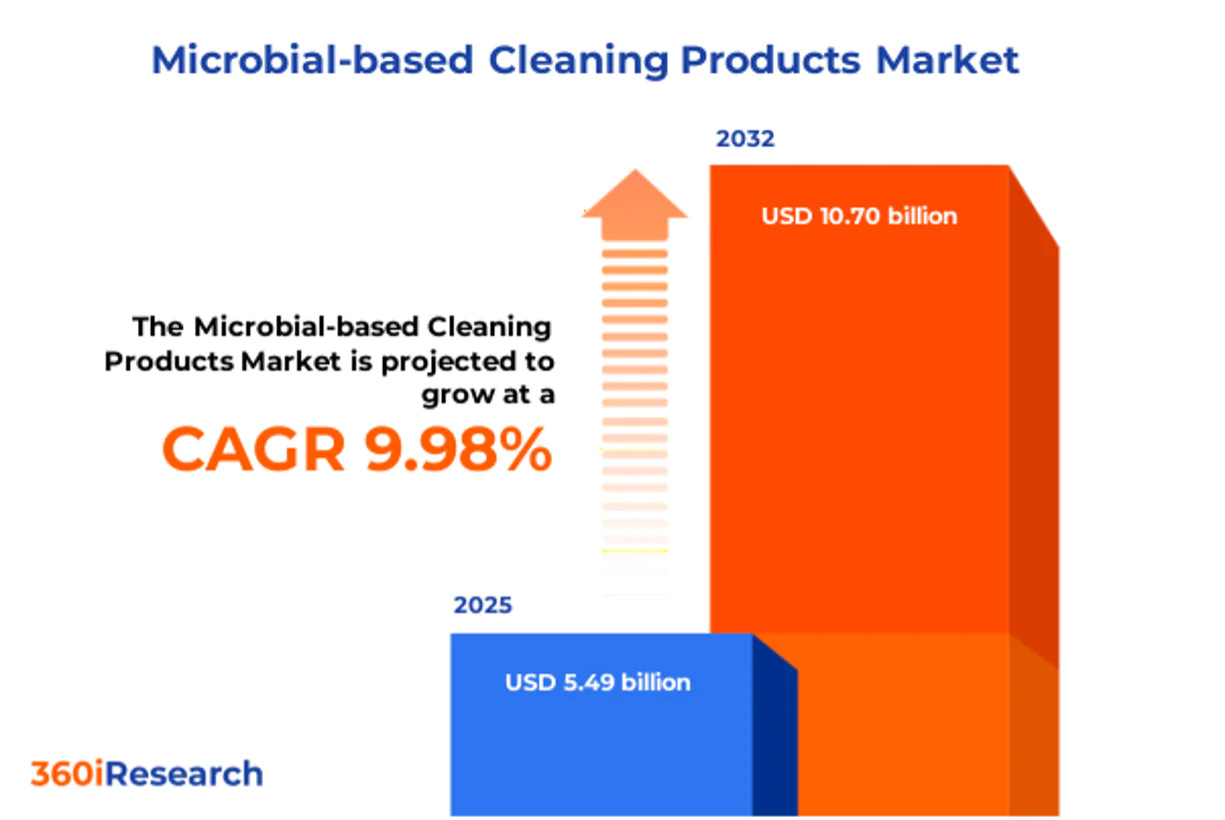
Figure 1: Projected growth of the microbial-based cleaning products market into 2032. Image from 360iResearch.
Offering Biologicals? Choose Bacillus
If you want to start offering a line of biological products—or revitalize the formulas of an existing one—Bacillus bacteria is the perfect place to start. Its spore-forming nature makes it highly stable and easier to formulate with, opening you up to numerous product possibilities. Bacillus also produce a multitude of unique enzymes that help break up FOG and other unwanted compounds into smaller pieces, making the digestion process faster and easier. While many chemical products also include enzymes, they must be added as a separate ingredient. You can, of course, add enzymes to your biological products as well, but if you’d like to save on purchasing another ingredient, you can take advantage of Bacillus bacteria’s natural enzyme production.
MDG: Your Biological Ingredient Partner
Now that you know the main differences between chemical and biological products, you need trusted ingredient suppliers that can get you what you need to succeed. If you’re offering biological products, MDG is the partner for you! We specialize in Bacillus: Our R&D teams work constantly to discover new strains with in-demand cleaning capabilities, and our technical experts provide guidance and education to help you understand exactly what’s going into your final product. With the expertise we provide, you’ll be set up for success when formulating and selling your biological-based cleaning products.
Ready to start the conversation? Contact us today!
MDG is the Bacillus solution that helps you scale and streamline without sacrificing product effectiveness.