

Keep Up to Date with MDG
MDG News and Updates
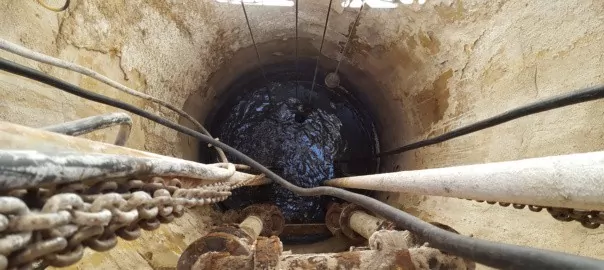
Lift Stations 101: Work Smarter, Not Harder
Lift stations are commonly used as a part of operations across a variety of different industries. While they are extremely useful, they can be difficult to maintain when not cared for properly. At Microbial Discovery Group (MDG), we have spent countless hours in the field with our partners, reviewing their customer’s maintenance challenges, and looking for new ways to innovate. As a result, we were inspired to create a comprehensive approach to lift station treatment that can garner results quickly. LIFT STATION BASICS By design, lift stations are used to pump liquid, typically some form of wastewater or sewage, from a lower elevation to a higher elevation. This process begins when sewage is fed into the station and into an underground well. The well is furnished with several different float switches to detect the volume of sewage present. When the sewage level rises to a predetermined point, the pump begins to propel the sewage upward through a pipe system until it exits the station. From there, the sewage could be arriving to a wastewater treatment plant or to flow downward with gravity until it arrives at the next lift station. In some cases, the pump transports the sewage through a […]

Bioaugmentation 101
What is bioaugmentation? The word “bioaugmentation” can be broken down into two parts: -bio and -augmentation. Together, they describe the process of adding helpful, pre-selected bacterial strains that were isolated from a specific environment (biology) to enhance (augment) an existing microbial community. Why are bioaugmentation products used? Just like you and I, not every species and strain of bacteria are good at everything. We all have a unique set of talents and abilities. Bioaugmentation products are used when you want to improve an aspect of an environment biologically (i.e., eliminate foul bathroom odor, digest complex hydrocarbons in soil, reduce wastewater sludge). And while the existing community of bacteria are good at certain things, when we introduce specific strains that are better than others, we can make the entire population more efficient. For example, in wastewater treatment, while the existing community may be good at breaking down specific substrates, the addition of Bacillus has been shown to significantly reduce fats, oils, and grease (FOG), sludge, odors, COD/BOD, suspended solids, the chance for system upsets, and more. How do the bacteria within bioaugmentation products work with the existing microbial community? It is vital to note that rather than taking over the system, […]

What is a Bio-Enzymatic Cleaner?
As cleaning continues to trend upwards, it’s important to understand all the terminology and options in the Industrial and Institutional industry. The term “bio-enzymatic cleaner” is one you’ll come across often, but depending on which customer is requesting it, they may be requiring something different than the next. Here at MDG, we describe bio-enzymatic cleaners as cleaners that use some form of biology to aid in the cleaning or removal of organic material. While many companies may have a similar definition, there is a lack of understanding around the different types of biology used as well as the differing benefits. Many bio-enzymatic cleaners contain either enzymes or bacterial culture which produce enzymes. Both biological ingredients can be used independently or in combination to break down soils, grease, food, or other materials. At MDG, we make biological concentrates for manufacturing companies who then formulate and label bio-enzymatic cleaning products. Each partner of ours is unique in application, business needs, and definitions of success. Depending on the customer, our recommended biological additives changes. The table below highlights some of the main differences between biological additive options: Ingredient Enzymes Bacillus Bacteria Enzyme + Bacillus Combination Definition Enzymes are non-living proteins produced by organisms […]

The Dangers of Hydrogen Sulfide Exposure
Wastewater and collection systems with anaerobic areas, FOG, or sludge build-up provide the perfect environment for hazardous Hydrogen sulfide (H2S) production. Because of this, it’s not uncommon for concentrations to climb above 1000 ppm! To understand the risks, check out the chart below to better understand the dangers associated at every level. ** Click to Enlarge What should you do if you’re dealing with H2S? Enter a safe, effective solution: bioaugmentation! Hydrogen sulfide (H2S) gas is a by-product of sulfur-reducing bacteria (SRB), using sulfur compounds in the absence of oxygen (anaerobic environments). By disrupting growth conditions for SRBs, Bacillus bacteria are able to reduce the production of H2S without the need for harsh chemicals. Connect with our team and we can get ahead of this dangerous and destructive problem together.

MDG’s Zymobac® Product Is Now OMRI Listed®
MDG is excited to announce the OMRI listing for ZymoBac® GRO M50B, our solution for the Plant Health market. You can view ZymoBac® GRO M50B’s certificate here! “MDG is excited to announce that OMRI has reviewed ZymoBac® GRO M50B and has determined that it is Allowed for use in compliance with the U.S. Department of Agriculture (USDA) National Organic Program (NOP)!” Shannon Losing., Regulatory and Quality Manager of Microbial Discovery Group. What is ZymoBac® GRO? Our ZymoBac® GRO line chosen for its wide arrary of enzyme production to improve plant health and increase yields, and this listing now means that ZymoBac® GRO M50B can be used as a part of the USDA National Organic Program. We are proud that our Bacillus can be a part of organic agriculture, giving farmers a plant health product alternative to traditional materials. The organization that gives these listings is OMRI, the Organic Materials Review Institute. OMRI is a non-profit organization that reviews and lists products that follow the USDA in the National Organic Program. OMRI lists agricultural input products such as nutrients, pesticides, crop treatment, and animal feed additives. What does this listing mean for ZymoBac® GRO M50B users? OMRI informs producers about products that can be used in organic farming operations, making it easy […]
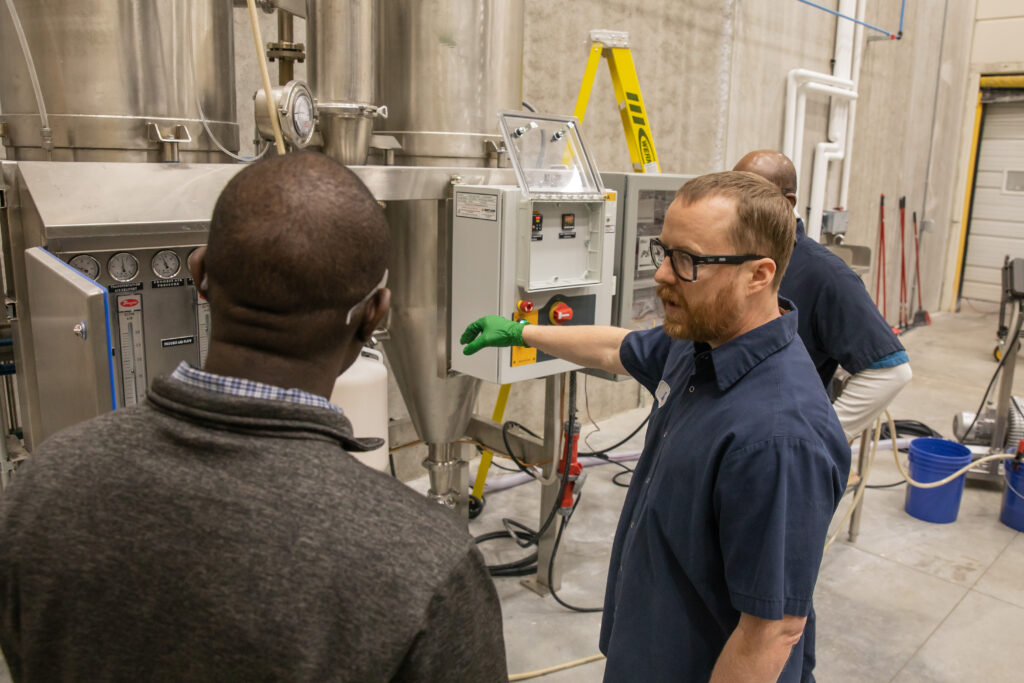
Two Big Reasons You Need Our Small Spray Dryer
Throughout a facility tour at MDG you’ll walk past different sizes of the same equipment, one example, specifically of interest to many plant companies, is the 6-foot pilot spray dryer that stares up at a 34-foot electric production spray dryer. Flexibility in spray drying equipment size offers two intentional benefits: affordable trials and high-yield spore production. What is Spray Drying? MDG’s Pilot Spray Dryer Spray drying is used in markets such as custom fermentation, plant health, animal agriculture, wastewater, I&I, aquaculture, human probiotics, landfill, and bioremediation. This process involves drying liquid droplets into a fine powder. A nozzle that turns a stream of liquid into a fine mist allows for droplets ranging in micron sizes to be achieved and produce fine particles as the water droplets dry. Fine particle sizes are required for applying product through in field spraying applications making it a popular drying method for agriculture products. Affordable Trials Field trials are a common step in bringing a new strain or product to market. Field trials require a small amount of high-quality product and bringing a product to market requires high amounts of high-quality product. While that may seem like stating the obvious, few manufacturers are set-up to execute on […]
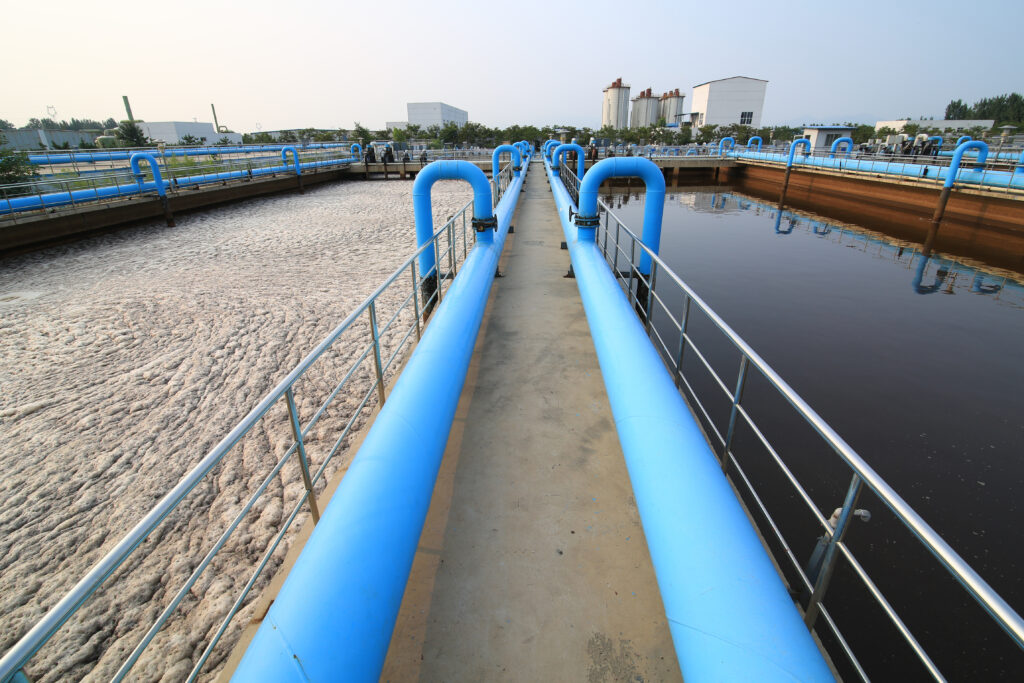
Wastewater Treatment Mistakes You’ll Never Make Again
When selling microbial products and programs, you’ll inevitably encounter a customer that says, “I’ve tried something like that before and it didn’t work”. This kind of experience often links back to one of four common mistakes that were made prior to or during treatment. In this guide, we’ll go over these mistakes and how you as a distributor can avoid making them by choosing a microbial solution and partner that gives you the tools you need to make confident and accurate recommendations. PREVENTION: Biotifx® gives you opportunity-specific Application Guides that show you how to apply the product step-by-step. Additionally, Biotifx® gives you a System Survey Tool and Dosing Calculator that make it extremely easy to avoid incorrect application. PREVENTION: With the Biotifx® Survey Form and ROI Calculators, you can calculate an accurate value assessment for each of your customers. The program also comes with Proposal Templates that help you highlight obtainable results with real value to your customers. PREVENTION: Our Biotifix® Qualification Guide and step-by-step System Survey make it easy for you to find the right high-value opportunities for your customers. PREVENTION: Correctly measuring and documenting success is key to customer confidence. Biotifx® comes with […]
Are you over-preserving?
Many of us know what happens when you mistakenly under-preserve a biological product: the bottles start to bulge or suck-in (the latter can also be caused by fragrance issues), fungal growth starts to appear or it starts to have an unpleasant odor. But do you know what signs to look for if your product is over-preserved? There is usually one noticeable sign of an over-preserved product: the customers who were consistently using your product haven’t placed an order in a while. Understanding Preservatives The preservation system in your biological product is a double-edged sword. If you under-preserve, you get the problems mentioned above. But if you over-preserve, your product won’t work, or it will have a significant delayed reaction. This can lead some of your repeat customers to think that the product no longer works. Over-preservation occurs when too high of a concentration of preservatives is present in a product. The preservatives are meant to be diluted to a predetermined point as indicated by the number in front of the X on the label (i.e. a 10X product would be 1 part product, 9 parts water). Diluting to the proper point allows the product to activate and begin working. If over-preserved, the […]

A Closer Look at X
X marks the spot…of some purchasing confusion. A common misconception when comparing the pricing of three different 10X concentrate products is that the “X” in the product name represents the microbial concentration. The X actually represents the level of preservation – i.e. the level of dilution required to make a 1X product. To ensure you choose the optimal product for your business and compare “apples to apples”, read on to learn more about the meaning of X as well as the other variables to consider when comparing options. X is for Preservation The X-value on a product label indicates the level of preservation of a product. There are other ingredients that are considered when determining the X-value such as microbes (as indicated by CFU/ml), surfactants and fragrance, but the preservative concentration is the main factor. It’s imperative to know the preservation level because it illustrates the proper dilution rate to make a 1X shelf stable product – also referred to as a Ready-to-Use (RTU) product. For example, a 10X product needs to be diluted 1-part product to 9-parts water while a 37X product requires 1-part product to 36 parts water. Proper dilution allows the 1X or RTU product to have […]
Biotifx® Liquid Max FRZ
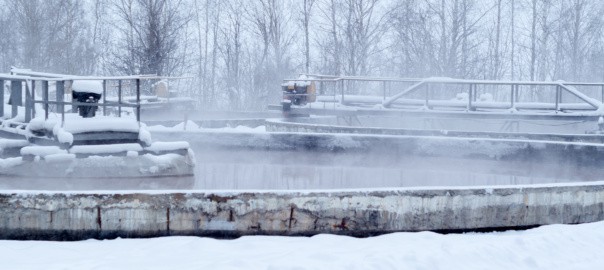
New Liquid Product for Winter Treatment Microbial Discovery Group (MDG) is excited to announce the launch of a new product for the Wastewater market. MDG formulated a new liquid cold water strain collection system treatment product, called Biotifx® Liquid Max FRZ. It allows you to outsmart the blizzards, sleet, and snow with Bacillus that remain active at low temperatures using scientifically selected strains. Keeping an automated dose of the Biotifx® Liquid Max FRZ during the cold months helps digest organic sludge, FOG and reduces H2S and odors, delivering consistent doses, frequently, and at scheduled times. What is Biotifx® Liquid Max FRZ: In addition to our cold weather Biotifx® FRZ line, Liquid Max FRZ is formulated with the same cold temperature Bacillus strains. The liquid version will conveniently treat wastewater treatment plants, lagoons, aerated sludge digester, industrial and municipal grease interceptors. Additionally, Liquid Max FRZ treats collection systems such as lift stations, force mains, sewer and gravity lines, or anywhere automation is desired, ideal in water temperatures 50F˚ and below. How does Biotifx® Liquid Max FRZ work: For many microbes, for every 10C˚ reduction in water temperature, reaction rates are cut in half. At these temperatures, the wastewater’s existing microbes don’t multiply and grow much because […]
News
MDG: The Podcast

